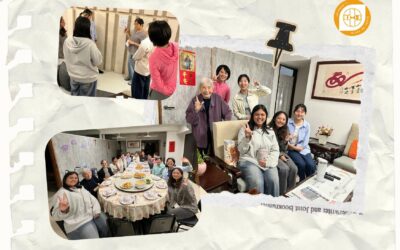
Advent begins this week, and with it, the invitation To Grow in Humanity This year, we don’t want to limit ourselves to mere reflections; rather, we want to accompany them with concrete experiences that help us grow in humanity as God’s beloved daughters and sons.
“Watch!” A Word to Begin Advent
The Gospel for this First Sunday of Advent (Mark 13:33–37) offers us an urgent and loving call: “Watch, keep watch, and pray! For you do not know when the time will come.” This is not a fearful warning, but an invitation to keep our hearts awake so that we may welcome God, who comes to dwell in our lives. To keep watch is to not let routine extinguish our longing for God, nor let the desire to control everything paralyze us.
From the perspective of our charism, this vigilance has a name: filial trust. This year, the beginning of Advent also coincides with the nine days leading up to the Feast of the Immaculate Conception, the anniversary of the founding of the Daughters of Jesus by Saint Candida, that humble woman of total filial trust in God. The certainty that “God is the Father who cares for everyone” fills us with the courage to step outside of ourselves and give our whole selves to the service of the Gospel. As we place ourselves in the Father’s hands with filial trust, his love transforms our frailties into channels of care and hope for others.
The encyclical *Magnifica Humanitas* shows us where that trust leads us: “We become fully human when we are more than human, when we allow God to lead us beyond ourselves to attain our truest self.” — Leo XIV, *Magnifica Humanitas*, no. 128
What do I need to “actively” surrender to God this Advent (fears, certainties, anxieties, expectations…) to allow His grace to lead me beyond myself and help me grow in humanity in the service of others?
A Guide to Growing in Humanity
1. Physical Dimension: The Daughter’s Rooting in the Rock
Stand with your feet shoulder-width apart and your knees slightly bent. Feel the soles of your feet firmly connected to the floor (grounding). As you inhale through your nose, gently raise your arms with your palms facing up to chest height, as if welcoming grace; as you exhale slowly through your mouth, lower your hands toward your belly (which is your vital center), feeling that God is your unshakable foundation. Repeat for 5–7 minutes.
Spiritual fruit: Grounding the body in the certainty of the divine presence, releasing muscular tension, and preparing the spirit to keep vigil in peace.
2. Psychological Dimension: From Hypervigilance to Childlike Rest
Take a notebook and write down the automatic thoughts of anxiety or distress that have come up this week (e.g., “I don’t have time,” “I have to figure everything out right now,” “If I don’t control this, it will fall apart”). Apply a cognitive adjustment based on the anthropological truth: personal fulfillment does not come from dominating reality, but from growing in filial trust. Replace those thoughts with a realistic and liberating affirmation, and repeat it to yourself several times: “I do what I can, but destiny and providence are in the Father’s hands.”
Spiritual fruit: Peace of mind and emotional rest in divine providence, transforming limiting cognitive beliefs into trusting responsibility.
3. The Ignatian Spiritual Dimension: Composition of Place and Pause of the Senses
As evening falls, spend 10 minutes in a quiet place. Close your eyes and imagine the scene from the Gospel: the temple guard keeping watch through the night. Cultivate inner silence. Listen to the distant sounds, feel your calm breathing, and recognize the small glimpses of God’s presence in the ordinary moments of your day. Conclude with a heartfelt conversation with Jesus, offering Him your attentive care.
Spiritual Fruit: Practicing the Ignatian Pause to awaken the sensitivity of the heart and attune your spiritual senses to God’s presence.
4. Interpersonal Dimension: Deconstructing Words in Latent Conflict
Think of an interpersonal relationship marked by tension or rigid judgments. Before speaking, practice “disarming your words”: 1) Observe the objective facts without judgment; 2) Identify the unmanaged emotion (fear, insecurity, exhaustion…); 3) Recognize the deep, unmet human need within yourself and the other person; 4) Formulate a clear, respectful, and positive request. Approach that person with an open, nonjudgmental ear. (If you can’t meet with that person yet, mentally rehearse what that approach would look like.)
Spiritual Fruit: Transforming reactive communication into a channel for peace and fraternal understanding.
5. Organizational Dimension: Ignatian leadership of service and evolutionary purpose
In your work team or community, consciously create or acknowledge a space for shared discernment. Ask yourself openly: “Where is the Spirit calling us to evolve today at the organizational level?” Suggest simplifying a rigid procedure to make more room for trust, initiative, and shared responsibility.
Spiritual fruit: Having living, discerning, agile, and flexible structures that are truly oriented toward the common good and service.
Summary of the First Week of Advent
| Dimension | Key Practice | Expected Outcome |
| 1. Physical | Rooting in the posture of the confident watchman. | Physical grounding and inner peace. |
| 2. Psychological | Restructuring of beliefs related to control and hypervigilance. | Emotional rest in Providence. |
| 3. Ignatian Spirituality | Ignatian pause at sunset and sensitivity of the senses. | Discovering God’s daily visit. |
| 4. Interpersonal | Nonviolent Communication: defusing tension through language. | Empathetic dialogue and reconciliation. |
| 5. Structural | Discernment of Evolutionary Purpose and Simplification. | Trustworthy and flexible structures. |
For this week: a single practice, lived with authenticity
You don’t have to do everything, though it would be good if, throughout Advent, you did at least one practice from each of the dimensions. To start, if you prefer, choose the exercise that resonates most with you—the one your heart is asking for today—and give it to yourself this week: fifteen minutes in the morning for your body and mind, or ten minutes at sunset for the Ignatian Pause. If you and your community or team would like to share this, do so without adding meetings or extra burdens: simply agree on it and discuss the results.
Watching over, after all, means this: to stay awake so that the God who is coming may find us at home, in our daily lives, growing in humanity.