We continue to explore the world through the educational initiatives that follow Mother Candida’s approach, showing how the Global Educational Pact takes concrete form in each educational community. After learning about the meeting with farmers at Sacred Heart School-Cebu in the Philippines, the commitment to integral ecology by the Esperançar Project in Brazil, and the double anniversary of Colegio Mayor Montellano in Salamanca, today we travel to Jujuy, Argentina, where the Colegio Ntra. Sra. de las Mercedes makes caring for our common home a daily practice both inside and outside the classroom.
“Laudato si'” as a starting point
Pope Francis’s encyclical *Laudato si’*, dedicated to the care of our common home, invites us to recognize that our daily actions affect—directly or indirectly—the world we inhabit. His words challenge us:
“There’s no time to waste—we must act; we need to care for nature so that it can care for us. We need a change of course and a new awareness of the relationship between human beings and themselves, with others, with society, with creation, and with God.”
Raising Awareness Through Everyday Life
For this reason, the project aimed to raise awareness among students and encourage them to adopt specific habits that contribute to the conservation and preservation of the environment. The initiative began with caring for our everyday surroundings, based on the belief that small collective actions can bring about significant change. It also sought to foster environmental awareness that would not only provide knowledge about sustainability but also strengthen critical and reflective thinking, problem-solving, teamwork, and research, preparing students to tackle current and future environmental challenges.
Given this reality, knowledge is one of the most powerful tools for protecting the environment. It must be developed throughout one’s entire life by internalizing values, attitudes, and habits that can be applied to everyday life. We hope that students will adopt responsible practices, embrace an eco-friendly lifestyle, and become advocates for these values in the various settings in which they participate.
An interdisciplinary approach
The proposal was developed using an interdisciplinary approach and integrated various fields of study, with the aim of enriching students’ learning from diverse perspectives.
The content was designed to raise students’ awareness of their role as agents of change in protecting the planet. To this end, the program encouraged reflection on everyday actions and their impact on the environment, starting with taking care of one’s own space. Through theoretical and practical activities, critical thinking, environmental responsibility, observation, and analysis were strengthened in order to understand the complexity of the interactions between living beings and their environment and to encourage participation in the preservation of nature.
Research, Writing, and Community Engagement
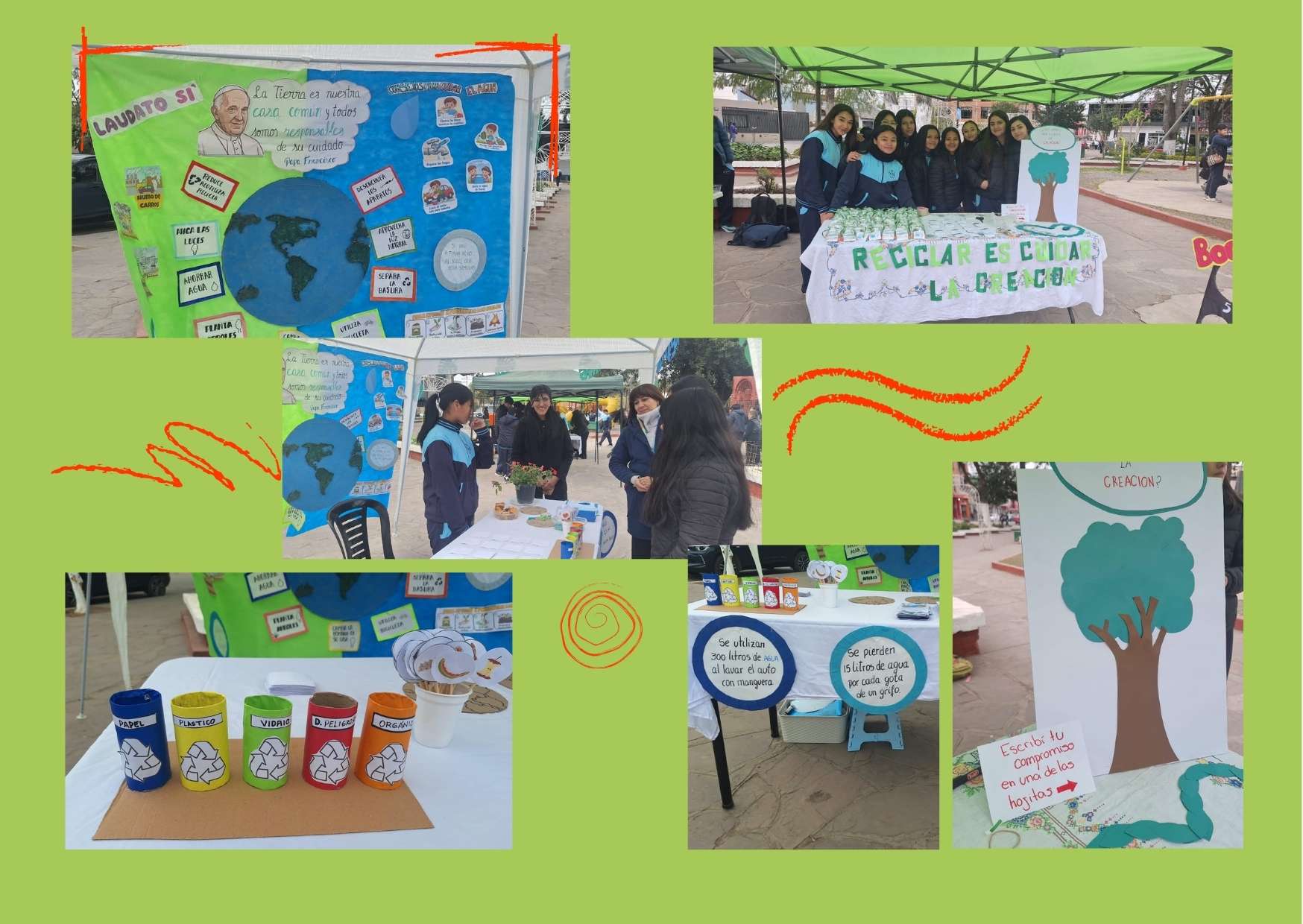
Activities aimed at strengthening reading habits, research skills, information interpretation, and writing were also incorporated. The students created brochures and reports that they shared with the community at a booth set up in the city’s central square. In addition, they explored recycling as a strategy to reduce pollution levels and reflected on how to reduce their personal ecological footprint.
Specific Actions at School
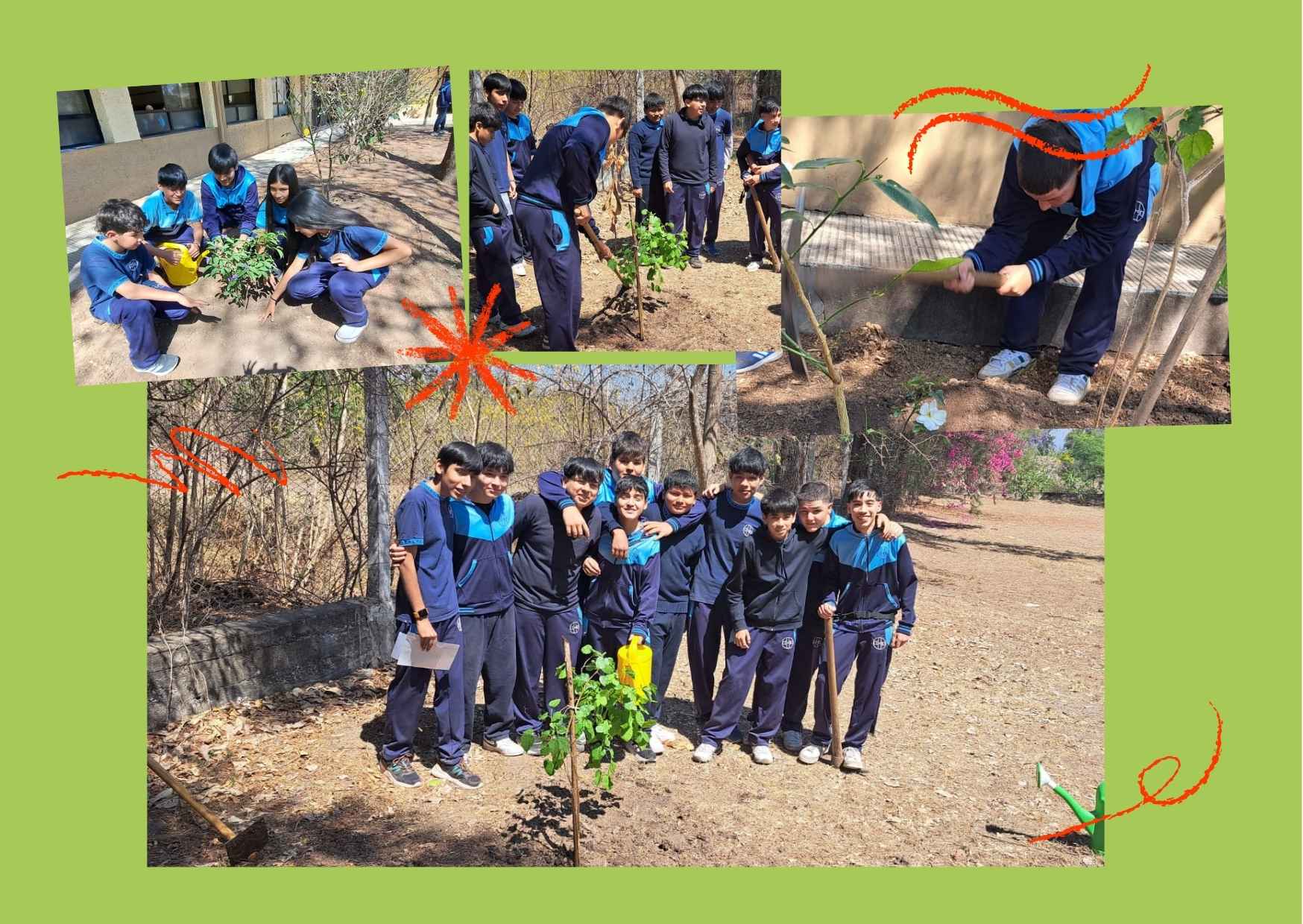
Through specific activities, the students developed habits for taking care of the various spaces that make up the school. To apply what they had learned in class, they conducted a field project that included picking up trash on the school grounds. In addition, a schedule was designed whereby the students themselves took turns assuming responsibility for maintaining the spaces.
Flower Farming and the Project’s Continuity
Finally, flower-growing activities were carried out by planting seedlings in the flowerbed at Santa Cándida and its surroundings. As part of the project’s ongoing efforts, these physical spaces and the life they support will be preserved. During periods of drought, regular watering of the plants will be organized to ensure their care.
Prof. Vanesa Apaza – Biological Sciences Teacher for the Elementary Cycle
A Network That Grows in Hope
The “My School, My Home” project thus joins the network of educational initiatives that the Daughters of Jesus have been developing around the Global Educational Pact. From Jujuy to the other side of the world, each educational community brings its own unique touch, but all share the same foundation: caring for our common home as a daily expression of hope and commitment to the future.